Clickbait titles
- The Next Stage in the Evolution of Political Organizations
- Clearing the Path for Grassroots Good Ideas
- Political Organizations: Common Failures and Fixes
- Organizational Models to End the Drought of Good Ideas in Outdated Political Organizations
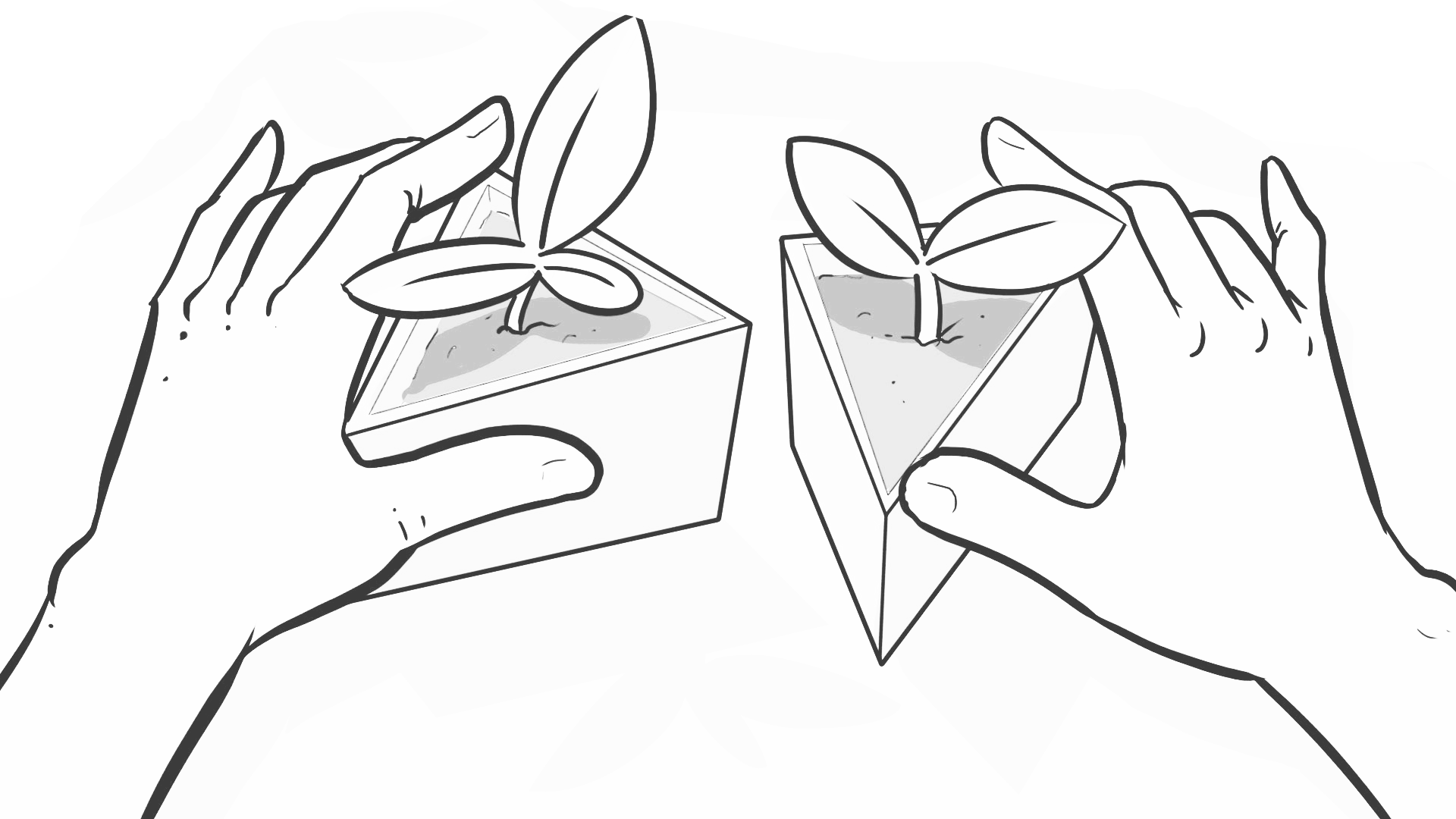
- Let's Fill the State with Good Ideas
Let's Fill the State (EU) with Good Ideas
- Why?
- The more good ideas are in the system - the more secured our freedom.
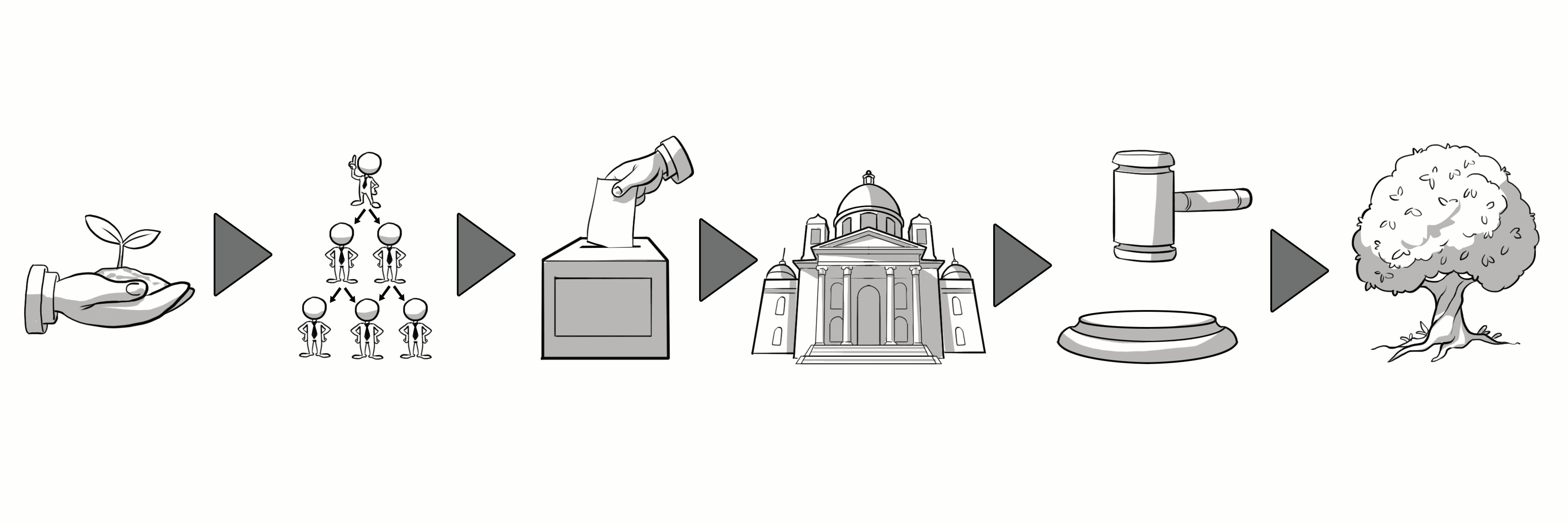
The Ideal Flow of a Good Idea
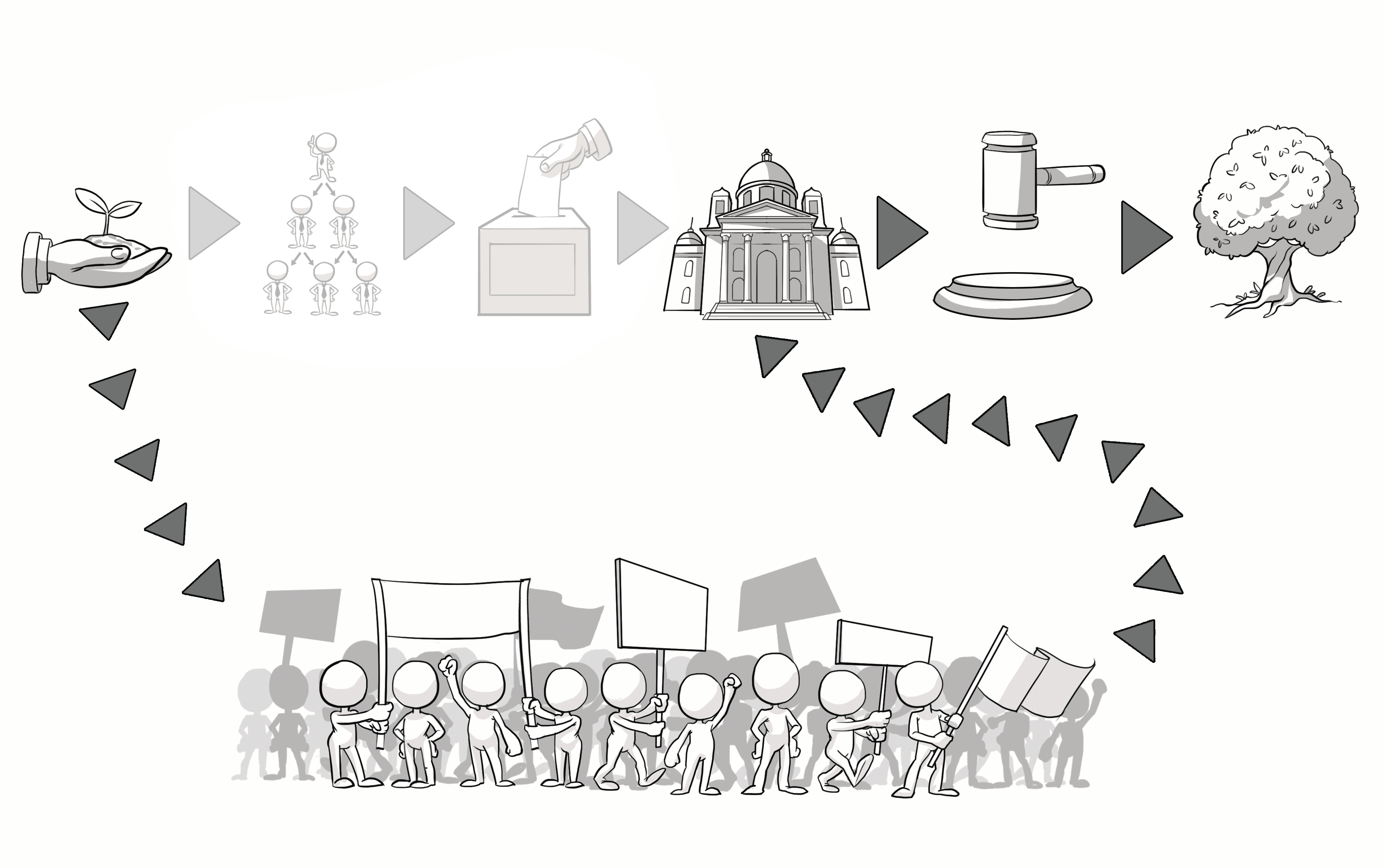
The Real Flow of a Good Idea
What Every "Driver" Needs
- Keys - voters' trust. Without it the engine won't start.
- Fuel - funding. The best idea won't move a metre without it.
- Licence - a validated, executable idea. Most organisations are stuck here.
- More members in the car don't help - the car still doesn't move.
- This analogy has more layers - we will return to it.
Vision without action is daydreaming.
Action without vision is a nightmare.
Japanese proverb
Debug: Classic Political Organisation
- Ideas appointed from the top - cooptation over contribution
- Loyalty rewarded over merit
- Local branches as gatekeepers, not incubators
- Good ideas die in committees
- One entry point: join the queue and wait
- Fixed structure - no bodies or processes designed for growth
A Few Concepts Before We Continue
* Eclectic
from Greek eklektikos - selective
- Taking what works - wherever it comes from - for better outcomes
- Drawing from different fields without committing to any single one
- The opposite of ideological purity
- Here: management and organizational theory, Declaration of Human Rights, NLP, systems thinking, open-source culture, business incubators...
- ...and decades of IT consulting - delivering software that empowered end users across very different organizational models
A VUCA World
Bennis & Nanus, US Army War College, 1987
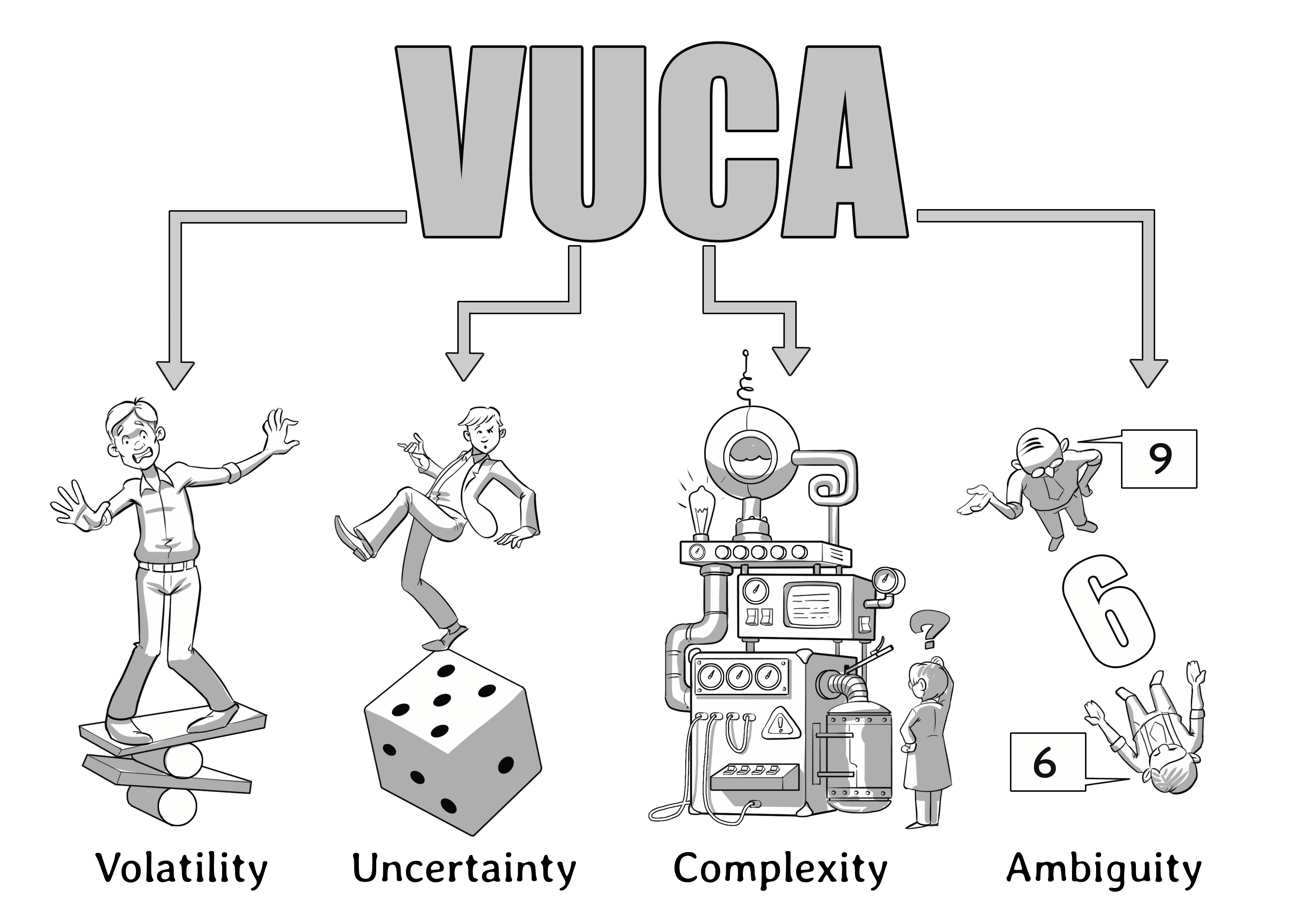
Our current answer: political organizations still running on the same statutes as in the 19th century!?
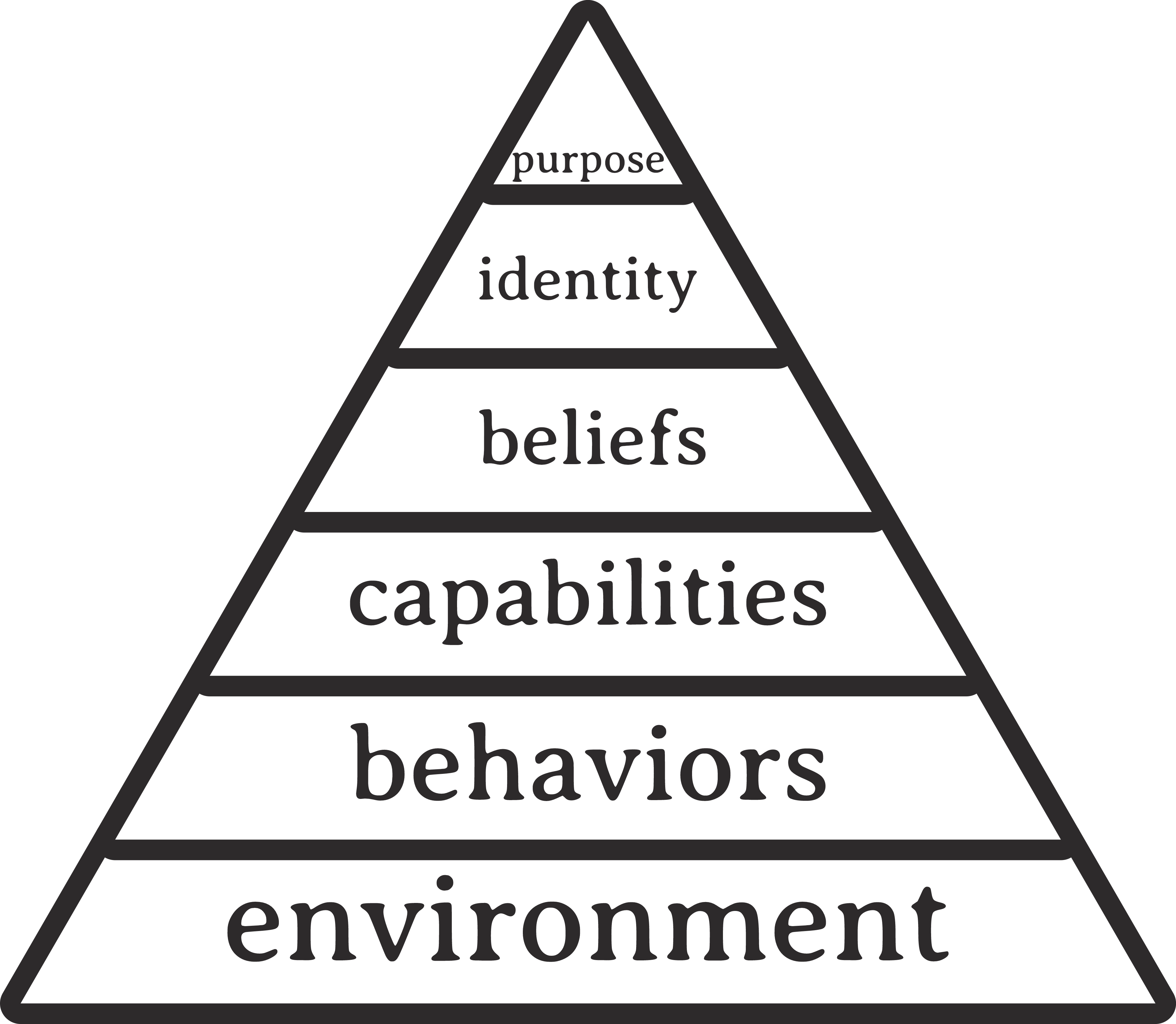
Dilts' Triangle
Robert Dilts, Logical Levels model, NLP - based on Gregory Bateson's work, 1990s
6 Sources of Power
Eric Liu, You're More Powerful Than You Think, 2017
- Physical force - coercion, violence
- Wealth - money and resources
- State action - law and institutions
- Social norms - culture, what people consider normal
- Ideas - the one any organisation can build without money or guns
- Numbers - mass mobilisation
11 Principles
Gary Hamel, What Matters Now, 2012
- No one can kill a good idea
- Everyone can contribute
- Everyone can lead
- No one can dictate
- Everyone chooses their own reason
- Easy to build on others' work
- No bullies or tyrants
- Agitators are not marginalised
- Excellence usually wins (mediocrity does not)
- Cut practices that kill enthusiasm
- Great contributions are recognised and respected
5 Principles of Democracy
V-Dem Institute — Varieties of Democracy
- Electoral - free and fair elections
- Liberal - protection of individual rights from power
- Egalitarian - equal access regardless of background
- Participatory - active civic engagement beyond voting
- Deliberative - reason-based public debate
How to Diagnose a Political Organization's Soul?
Diagnostic Questions (extracted)
- Are decisions based on arguments rather than authority?
- Is contribution expected while loyalty stays optional?
- Do people know how ideas move from draft to execution?
- Can people fail without losing trust?
- Do ideas advance because they're good, not because they're (judged as) politically useful?
- Does the org understand problems before designing solutions?
- Do teams form around problems instead of bureaucratically?
- Does membership make people more capable rather than more depleted?
Don't chase butterflies.
Tend your garden and they will come on their own.
Mario Quintana (attr.)
Proposal
https://goodideaclub.org
Why?
- What you practice is what grows - virtue or vice
- VUCA - rigid structures fail under complexity
- Dilts - environment shapes everything
- 6 Sources of Power - ideas are the lever
- Hamel - design conditions for contribution
- 5 Principles of Democracy - deliberation, not just elections
- A redesign that can start now - no waiting room for elections
- Whatever we conclude - let's get good ideas validated and empowered on their way to the system - not leave them in a turned-off car
What Is an Incubator?
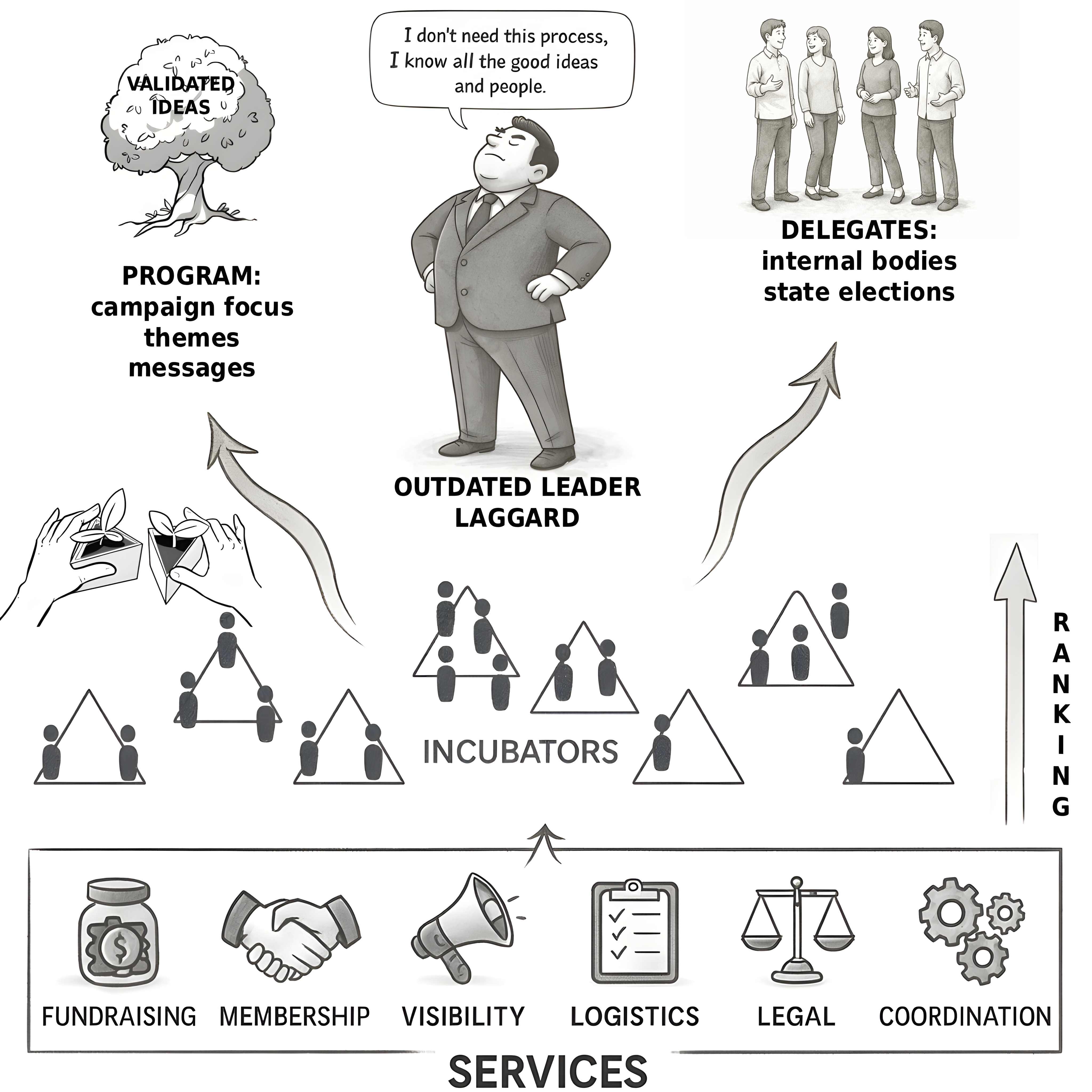
- The basic unit - power flows to proven ideas
- A protected environment for a fragile "egg"
- Voluntary, one problem - no limit on how many - this is the model for growth
- Open to anyone whose competence strengthens the idea
- For discovery, not execution - stay open to learn
- Built on trust - without it, ideas rarely survive
Why 'Incubator'?
- Biology - keeping conditions for an "egg" in its most delicate state
- Startups - space, mentorship, networks for fragile ideas to survive
- Brainstorms are brief - incubators turn them into lasting solutions
- Not a committee - committees don't carry the logic incubators are meant to support
Incubator Rankings
- A league table of incubators based on performance
- Top incubators shape campaign priorities
- Their most valued contributors become candidates
Rankings: What It Is Based On
decathlon-style score across four groups
- Voter Resonance - does it address problems voters recognize?
- Idea Stewardship - developed responsibly, through iteration and merit?
- Systemic Entry Readiness - can it carry ideas into institutions?
- Dead-End Signals - is it draining resources on an unviable path?
- Objective measures + peer and validator feedback - popularity alone cannot win
- The book includes a draft ranking handbook - the internal document that will formally regulate this
Rankings: Why It Is Necessary
- Power must not concentrate - rankings let it flow toward ideas that work
- Filters the field - weak incubators fade, strong ones become engines of trust
- Candidates earn their place through contribution, not co-optation
- The organization is always election-ready
In weak companies, politics win. In strong companies, the best ideas do.
Steve Jobs
Rankings vs. Opinion Snapshots
- Rankings replace opinion snapshots with developmental evidence
- Polls measure sentiment - rankings show which ideas proved themselves through work
- Parties ask voters what they want - incubators test ideas before campaign season
- Replaces guessing with organized exploration
If I had asked people what they wanted, they would have said a faster horse.
Henry Ford (1863-1947), pioneer of automobile mass production
Services: 3xM
Money - Membership - Messages
- Fundraising - accounts, donation tools, donor campaigns, reporting
- Membership - onboarding, contribution logs, incubator registry and ranking
- Visibility - building trust through events, media, participatory formats; writing, design, multimedia for incubator ideas
Services: Operations
- Logistics - equipment, venues, software, shared tools
- Legal - central expertise and a public knowledge base
- Coordination - launching incubators, connecting people, guarding values, mediating conflicts
From Idea to Law
- Idea
- → Incubator - research, design, validation
- → Programme - published and transparent
- → Candidate - the hero of the topic
- → Institution
- → Law
The Ideal Flow of a Good Idea
Multidisciplinary from Day One
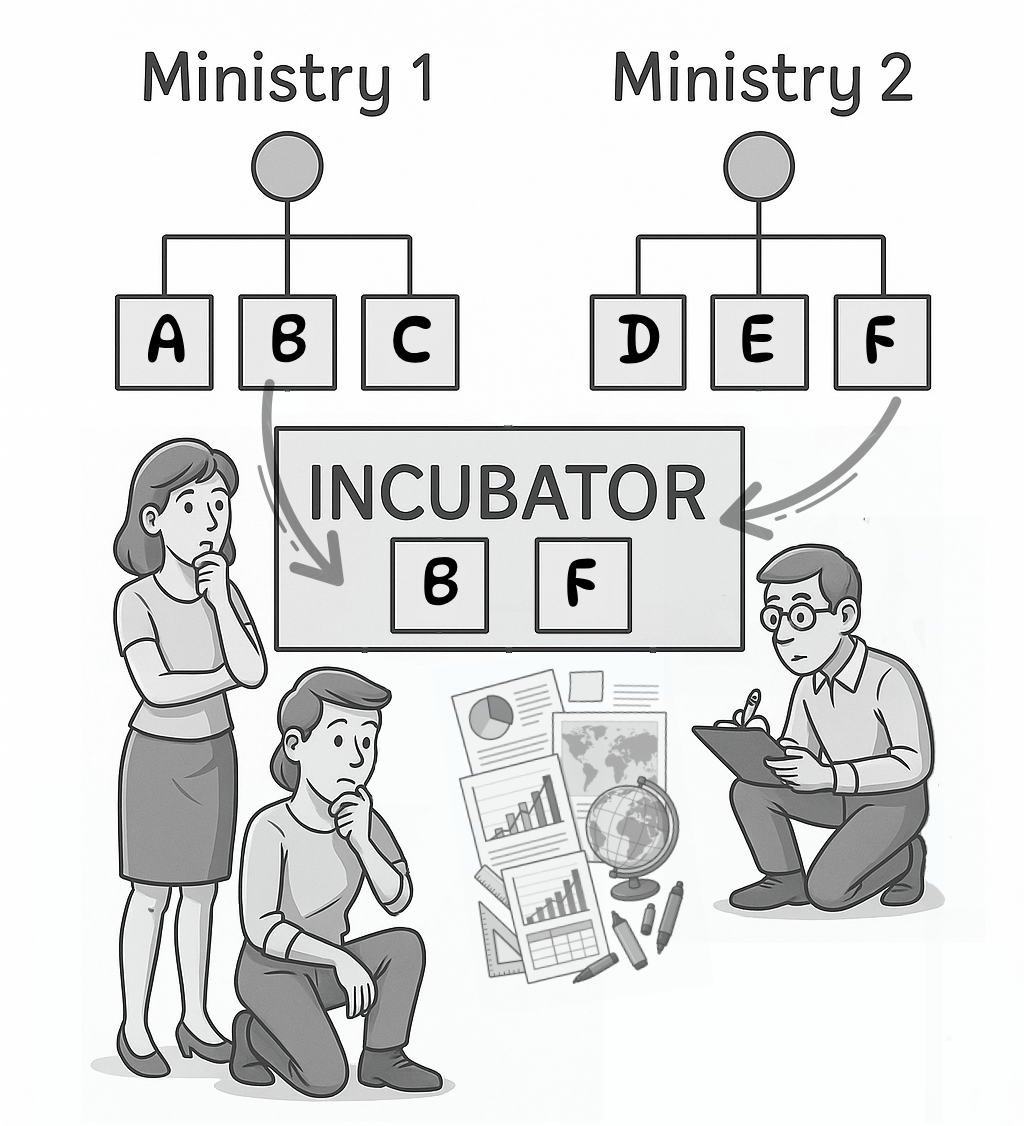
Why Multidisciplinary?
- Every real problem crosses disciplines (VUCA)
- A consilium at the start, not at the end - specialists together from day one, not after failure
- Experts and lived experience side by side - expertise is not replaced, it is complemented
- Named after the goal, not the profession - "Emergency Response Within 8 Minutes", not "Health Policy Committee"
- Problems, not ideology - VUCA challenges do not fit 19th-century left and right categories
Software Enforcement
- Rules enforced by software, not goodwill - harder to bypass
- Every output checked against a human rights framework
- AI flags potential violations - humans decide
- A good idea cannot become a bad decision just because it was popular
Proof: Open Source
- Linux was built by thousands, with no boss and no hierarchy
- Meritocracy, openness, contribution visible to all
- If it works for an operating system, it works for a political programme
Serbia: Grassroots Energy
claims from the book - proved in practice
- Citizens showed they can change the political scene
- Classic organisations failed to convert that energy into results
- Full opposition political organizations were wiped out - none in Parliament
- This raises the question of organisational architecture
The Movement Was Already Living These Principles
claims from the book - proved in practice
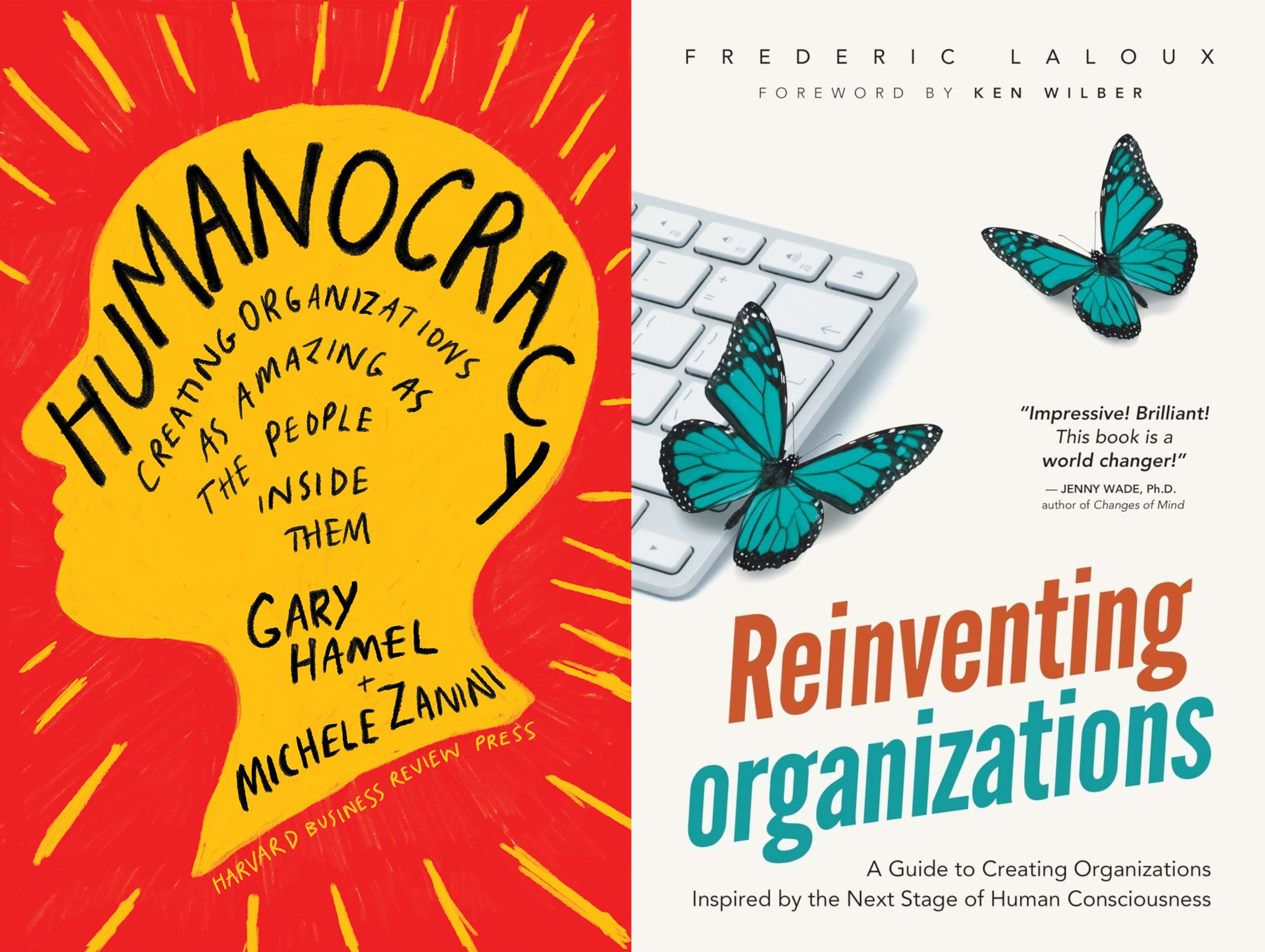
| Humanocracy principle | As seen in the grassroots movement |
|---|
| Ownership | People felt it was theirs, not someone else's project |
| Meritocracy | Voice went to contributors, not title-holders |
| Openness | Public decisions, information available to all |
| Experimentation | New forms of protest; fast exit from what didn't work |
| Paradox | No single leader - yet coordinated |
New Environment, New Results
claims from the book - proved in practice
- Students didn't enter old organisations - the environment couldn't grow anything new
- They changed the base of the triangle: a completely different form of association
- New environment → new behaviours → new capabilities → new values
- The model wasn't designed - people arrived at it instinctively
Classic vs Incubator (1/2)
| Classic political org | Incubator model |
|---|
| Cooptation from the top | Open market of ideas |
| Loyalty rewarded | Contribution rewarded |
| One entry point | Multiple entry points (any topic) |
| Power concentrated | Power distributed |
| "All the same" stigma | Goodness as a competitive advantage |
Classic vs Incubator (2/2)
| Classic political org | Incubator model |
|---|
| Wait your turn, ask permission | Have an idea? Start now |
| Pinball: reflex and reaction | Billiards: observation and design |
| Priorities from polls | Ideas proven through work |
| Territorial branches, sector silos | Multidisciplinary teams around a problem |
| People as tools of the organization | Organization as a tool for people |
What Volt Can Do?
- Diagnose honestly - the answers will surprise
- Put incubators into the statute - redesign bodies and processes, as soon as possible
- Meanwhile practice incubator - begin now
- Build services before scaling - or they burn out
- Write rules before power arrives
- Work with early adopters, not laggards
- What you train is what grows
Why Volt Can Do It?
- The seeds already exist - European Communities are already almost incubators
- Volt is asking for this itself - Shine 29 calls for exactly this process
- Services are already being built - Volt Academy, open-source voting, comms office
- Problems over ideology - bold, pragmatic, evidence-based; the same shift the book proposes
- A culture that experiments - DreamComTrue, ECHO; already doing the hardest part
Freedom is humanity's greatest idea.
We reach that greatest idea by cultivating many good ones.
When goodness is not organized, malicious organizations rise to power.
Your Choice Is?